Every house has a drawer with three mismatched hooks, a bent nail and a single plastic anchor of unknown origin, and every picture in that house is hanging from the contents of that drawer. The picture that slid down the wall at two in the morning did not fail randomly. It failed because a fifteen-pound frame was hanging on a pin meant for a postcard, and the arithmetic caught up with it.
The drawer got that way honestly. Hanging hardware is bought one crisis at a time, a hook for this mirror, a pin for that certificate, a mystery anchor left over from a flat two moves ago, and single-crisis purchases never add up to a system. Nothing in the drawer is labelled, nothing matches, and nothing is rated for the thing it currently holds. Bought as counted packs against a walked-through house, the same money ends differently: a reserve with the ratings printed on every box, and no more crisis purchases, because the counting was done once, in daylight.
Hanging is arithmetic, the same as any other job we pack for. A wall is a material with known limits. A frame is a weight you can read off a bathroom scale. A hook is a rated piece of metal, and the rating is printed on our packs for the same reason the count is: so the plan can be checked before the hammer comes out. That arithmetic runs wall by wall and room by room, and it ends in the counts a full house actually consumes.
Read the wall before the hook
Drywall, plaster and masonry take fasteners differently, and most two-in-the-morning failures are a wall misread rather than a hook misjudged. Drywall holds a surprising amount through a properly set pin hook, because the pin bites at a steep angle and the load pulls along the wall rather than out of it. Old plaster crumbles around a hammered pin but takes a fine nail through to the lath behind it. Masonry laughs at both and wants a drilled anchor, which is a different job with different hardware.
The angle is the part the drawer-of-mystery-hooks generation never learned: a pin hook is designed to enter at roughly forty-five degrees, high on the hook body, so the wall itself carries the shear. Driven straight in like a nail, the same hook holds a fraction of its rating. Our pin hooks ship with the angle set by the hook shape, and the load figure we print assumes the hook was used the way it was designed.
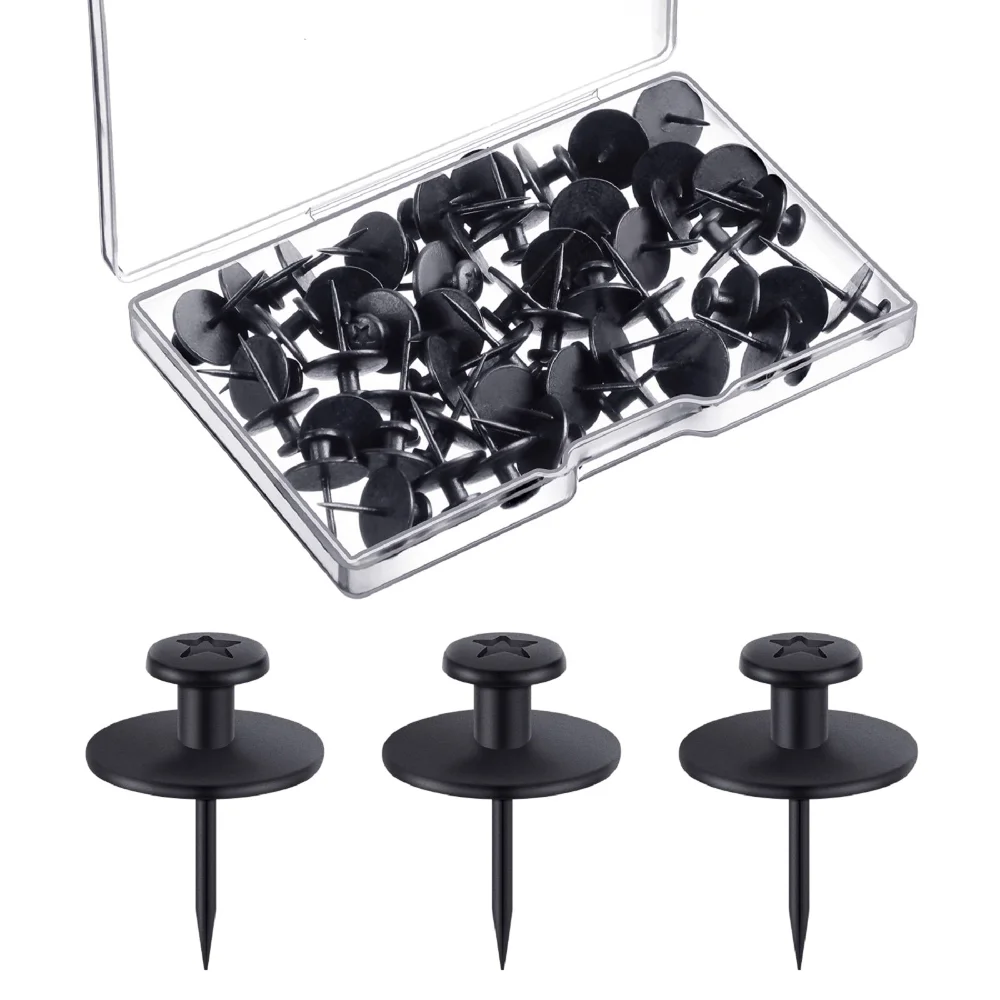
Picture Hanging Nails, 50 pcs, Black
Picture Hangers
★★★★★ 4.7 · 3,543 family reviews
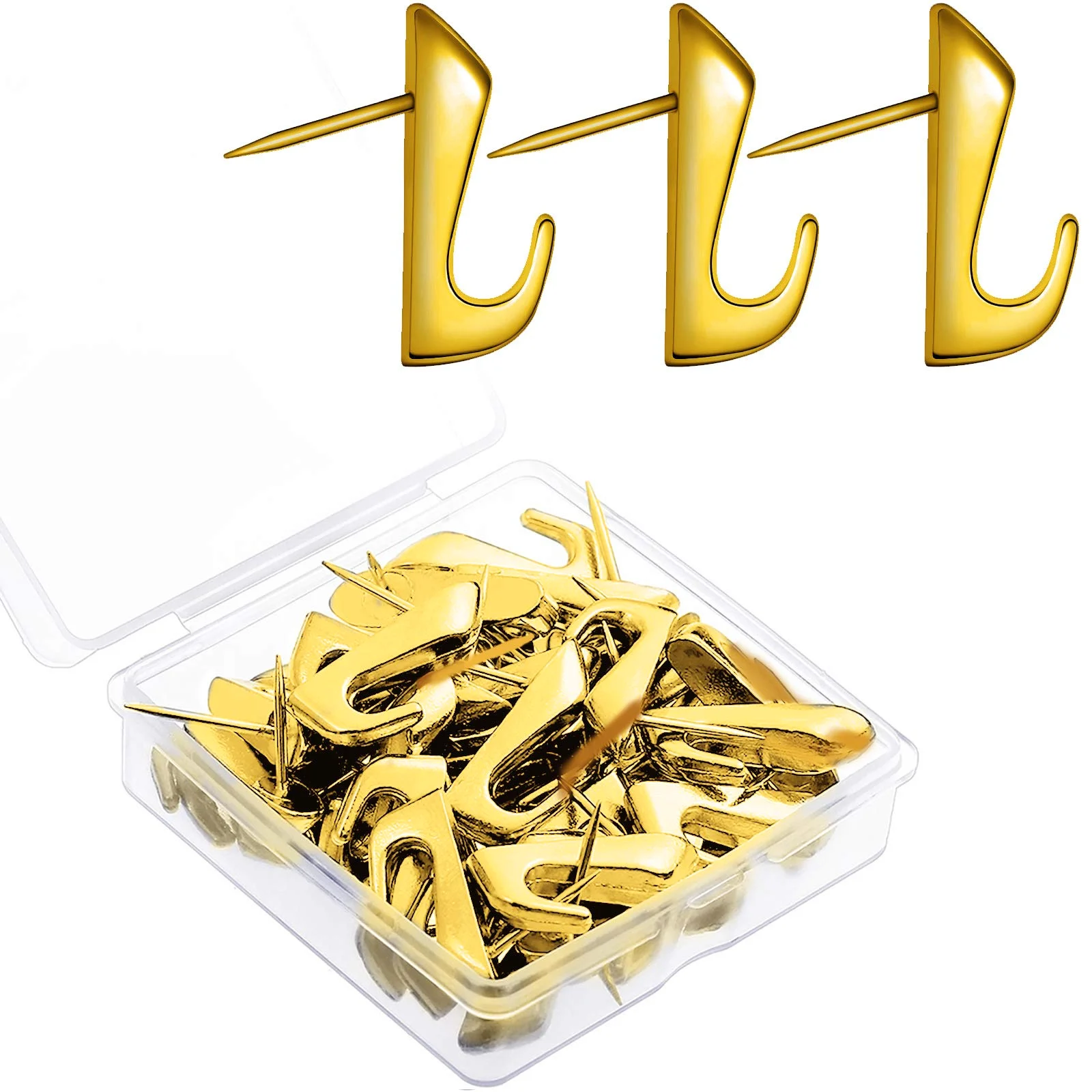
Push-Pin Picture Hooks, 30 pcs, Gold
Picture Hangers
★★★★★ 4.6 · 2,160 family reviews
The four-item toolkit
The whole discipline runs on four objects, none of them powered: a pencil, a bubble level, a tape measure and a tub of wall filler. The pencil marks where the top of the frame will sit, not where the hook goes, because the hook lands lower by the drop of the wire and that drop gets measured, not guessed. The level earns its place on anything with two fixed points. The filler is there for the holes that history left, patched in the same session, because a wall with old craters reads untidy no matter how well the new pieces hang.
A hammer joins the kit only for pin work, and a light one at that: pin-class fasteners are set with taps, not blows, and most of the failures we read about began with a framing hammer and enthusiasm. Everything heavier than that, the drill, the stud finder, the anchor bits, belongs to the anchoring jobs we keep handing away on purpose.
The weight bands, written down
Weigh the frame, then buy the band it falls in. A kitchen scale settles anything under ten pounds, a bathroom scale and a bit of subtraction settles the rest.
| The piece | Typical weight | The hardware that carries it |
|---|---|---|
| A print in a light frame | under 5 lbs | A double-headed picture pin or a small pin hook |
| A framed poster behind glass | 5 to 10 lbs | A 20 lb pin hook, set at its angle |
| A gallery frame, wood and glass | 10 to 20 lbs | A 20 lb pin hook per corner pair, or two hooks sharing the wire |
| A mirror in a heavy frame | 20 to 40 lbs | Two rated hooks into studs, never one |
| A display plate | under 5 lbs | A wire plate hanger sized to the plate diameter |
| Anything with drawers or doors | not a hanging job | An anchor kit into studs, per the federal stability rule |
The last row is not a joke, and it is the one place we hand the job away. Furniture and televisions are anchored, not hung, and the consumer safety commission has run a standing campaign on exactly this for a decade, with a federal stability rule for clothing storage units in force since September 2023. Our hooks hold frames, mirrors and plates at the loads we print. A dresser belongs on an anchor kit rated for it, fixed into studs, full stop. We read the campaign pages before writing this paragraph, and the source list with reading dates is on the routine page.
What a printed rating actually promises
A load figure on a fastener pack is a working limit, not a dare. It describes a static load, a weight that hangs still, on the wall type the fastener is designed for, installed the way the design assumes. Every word of that sentence is doing work. A frame that gets bumped by a door, a mirror on a staircase wall that catches a shoulder twice a day, a hook that also serves as a coat peg on school mornings: those are not static loads, and the honest sizing for them is the next band up.
Our own habit, at home as at the bench, is to size at half the printed figure for anything that lives where people move: a corridor, a kitchen, a child’s room. A twenty-pound hook read that way carries ten, and the other ten stand guard against the elbow, the vacuum handle and the door that swings wide. The upgrade costs almost nothing, because the next band up in a counted pack is a matter of pennies per hook. The printed number is the promise. The margin is the manners.
Plates: the hanger you are not supposed to see
A display plate is the one object in the house that must be hung without visible hardware, because the plate is the point. Wire plate hangers solve it with spring tension: four padded arms grip the rim from behind, and from the front there is only plate. Two figures matter, and both are printed on the pack. The hanger size must match the plate diameter, and the hook behind it must carry the plate weight, which for a ceramic dinner plate runs two to four pounds.
The counting mistake with plates is buying one hanger per idea instead of one per plate. A plate wall is built all at once or it grows one nail hole at a time for a year. Count the plates, add two for the pair you will inherit at the next family clear-out, and buy the pack that covers the number.
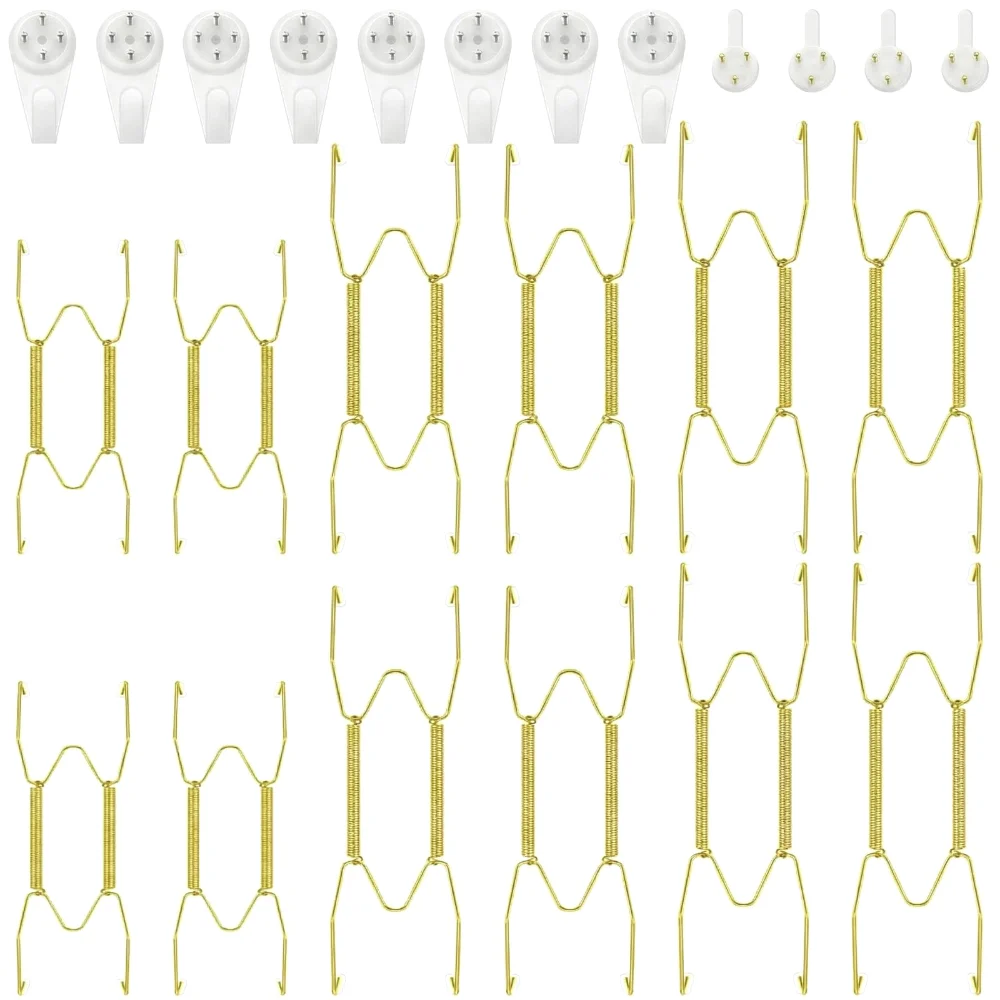
Invisible Plate Hangers, 12 pcs, Gold
Wall Plate Hangersin 2 colours
★★★★★ 4.6 · 3,673 family reviews
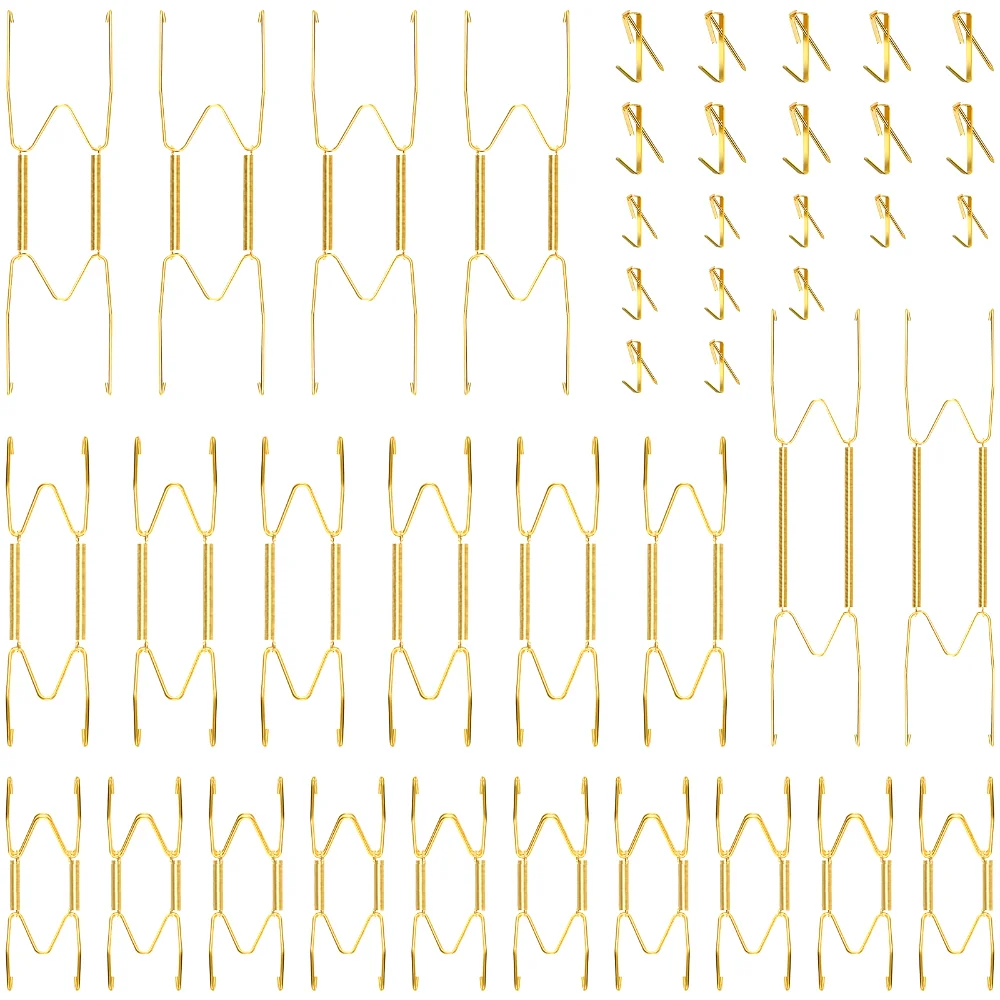
Invisible Plate Hangers, 20 pcs, Gold
Wall Plate Hangers
★★★★★ 4.6 · 981 family reviews
The staircase wall is the plate wall’s ambitious cousin, and it obeys one extra rule: the eye wants the arrangement to climb with the stairs. Set a pencil line parallel to the handrail, hang the largest plate or frame at the landing end, and step the rest down the line at even spacing. The hardware is unchanged, one rated hook per piece, but the count goes up faster than expected, because a staircase reads bare until at least five pieces are climbing it. It is the one wall in the house worth sketching on paper first.
The soft hang: curtains and the rings that move
Curtain hardware fails differently: not by falling but by fussing. A ring that sticks on the rod turns every morning into a negotiation. The ring diameter must clear the rod diameter with room to glide, so our ring packs print the inner measurement rather than a vague size name. The pin hooks that come in the same bag set the drape depth: pinned high, the curtain header stands proud of the rod; pinned low, it hangs relaxed. Thirty rings with their pins dress two standard windows with the count to spare, and the spare rings are the ones that vanish into the vacuum cleaner during the first wash cycle.
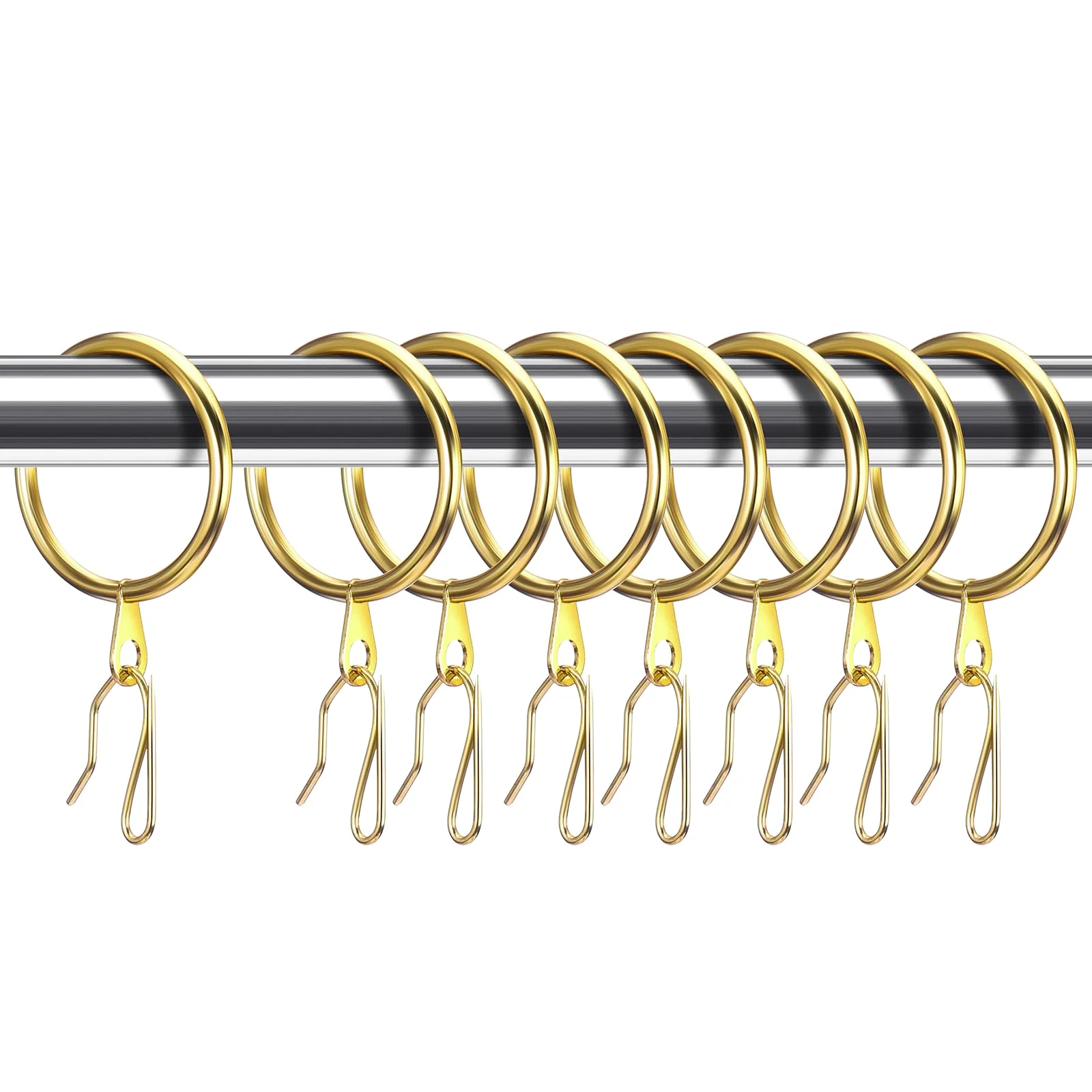
Curtain Rings with Hooks, 30 pcs, Gold
Curtain Rings & Pin Hooks
★★★★☆ 4.4 · 2,265 family reviews
S-hooks: the hardware that turns a bar into storage
An S-hook needs no wall at all. It needs a bar, a rail, a rafter, a fence line, and it turns any of them into hanging storage in the time it takes to place it. The kitchen rail takes utensils at one hook per tool. The garage rafter takes extension cords, hose loops and the folding chairs at one heavy hook each. The closet rod takes bags and belts. A ribbon lei rack the night before a graduation, as it happens, is a closet rod and eight S-hooks, and the overlap between that job and Graduation Day by the Numbers is not an accident. Jobs share hardware more often than shops admit.
Sizing is a matter of the two openings: the hook must close far enough around the bar to stay put, and open far enough at the mouth to take the thing being hung. Our packs split by length and gauge, from the three-inch kitchen size to rafter hooks that carry real weight in a garage, and the count per bag assumes you are outfitting a run of rail, not decorating a single nail.
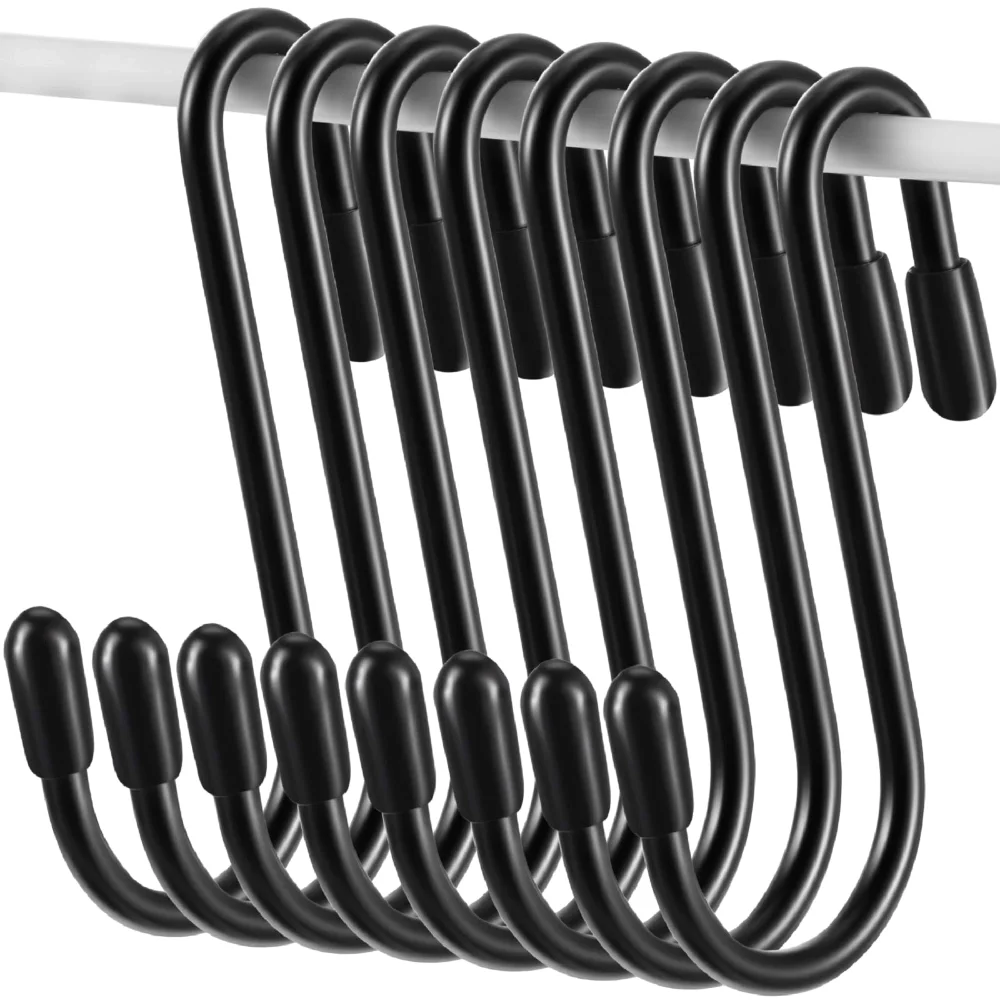
S-Hooks, 36 pcs, Black
S-Hooks
★★★★★ 4.6 · 1,867 family reviews
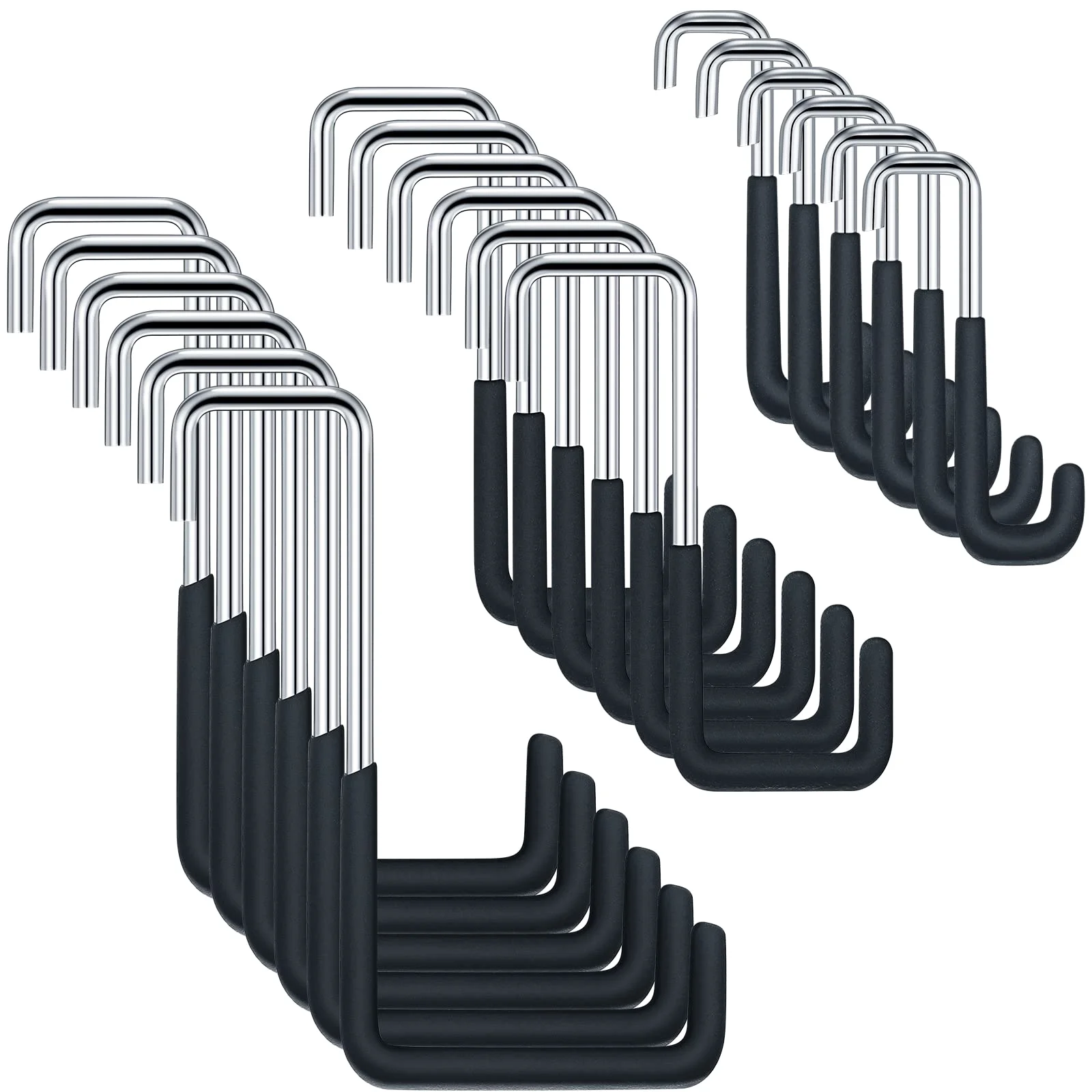
Rafter S-Hooks, 18 pcs, Black
S-Hooks
★★★★★ 4.5 · 183 family reviews
Reading the back of the frame
The wall is half the equation; the back of the frame is the other half, and it comes in three dialects. A hanging wire is the forgiving one: it finds the hook by itself and it can share its load across two hooks a hand-width apart, which is the trick that carries the heavy mirror band. Hang from two points and the effective load on each hook drops by nearly half, while the frame stops tilting every time a door slams.
A sawtooth hanger is the fussy one. It hangs from a single point, it does not share, and it holds the frame flat to the wall, so it belongs on the light end of the weight table and nowhere else. A D-ring pair is the serious one: two fixed points that want two hooks set level, which is the one hang in the house that genuinely rewards a spirit level and a pencil line. Match the fastener on the wall to the dialect on the frame and half the folklore about crooked pictures evaporates.
The kitchen rail, walked through
One worked example ties the whole method together. A kitchen rail over a counter is a bar, so S-hooks are the hardware, and the counting is done by walking the tools: ladle, spider, whisk, two spatulas, the small pan that never fits a drawer, the scissors, the coffee scoop. Eight tools, eight hooks, and two spares for the peeler that migrates and the mug that earns wall status later. The three-inch hook fits a standard rail with mouth enough for every handle in the drawer.
Load is not the question on a rail, reach is. Counting the tools takes five minutes. Placing the hooks takes five more: daily tools at the near end where the hand falls, occasional ones over the stove side, and a hand-width of empty bar left between clusters, because a rail packed edge to edge turns every retrieval into a chord of falling metal. Hanging takes two. Twelve minutes, and it is the single most used hanging in the house from the day it goes up.
The rented wall: holes you can hand back
A lease changes the arithmetic without changing the physics. The landlord’s interest is the wall at move-out, and the tenant’s interest is four years of pictures in the meantime. The peace treaty is the pin-class fastener: a pin hook or a double-headed pin leaves a hole the diameter of a sewing needle, which disappears under a thumb of filler in the time it takes to say deposit.
The renter’s mistake is not too many holes. It is one wrong hole: the single heavy mirror hung on an anchor-class fastener that was never needed, leaving a coin-sized crater where a pair of rated pin hooks sharing the wire would have left two pinpricks. Share the load across two pins and the wall carries more than most rentals ever ask of it, with an exit bill of nothing.
The other renter’s friend is the fastener that touches no wall at all. An over-door hook, an S-hook on a closet rod, a rail hook on a radiator shelf: zero holes, full function, and the whole kit moves to the next address in a sandwich bag.
The garage and the grid ceiling: hanging at scale
Some hanging jobs are not about one object but about a surface. A garage rafter is linear storage waiting for hooks: extension cords, hoses, camp chairs and the seasonal bin lids, one heavy S-hook per item, spaced a hand apart. A two-car garage swallows a dozen rafter hooks without looking equipped, and that appetite is the reason they come by the eighteen.
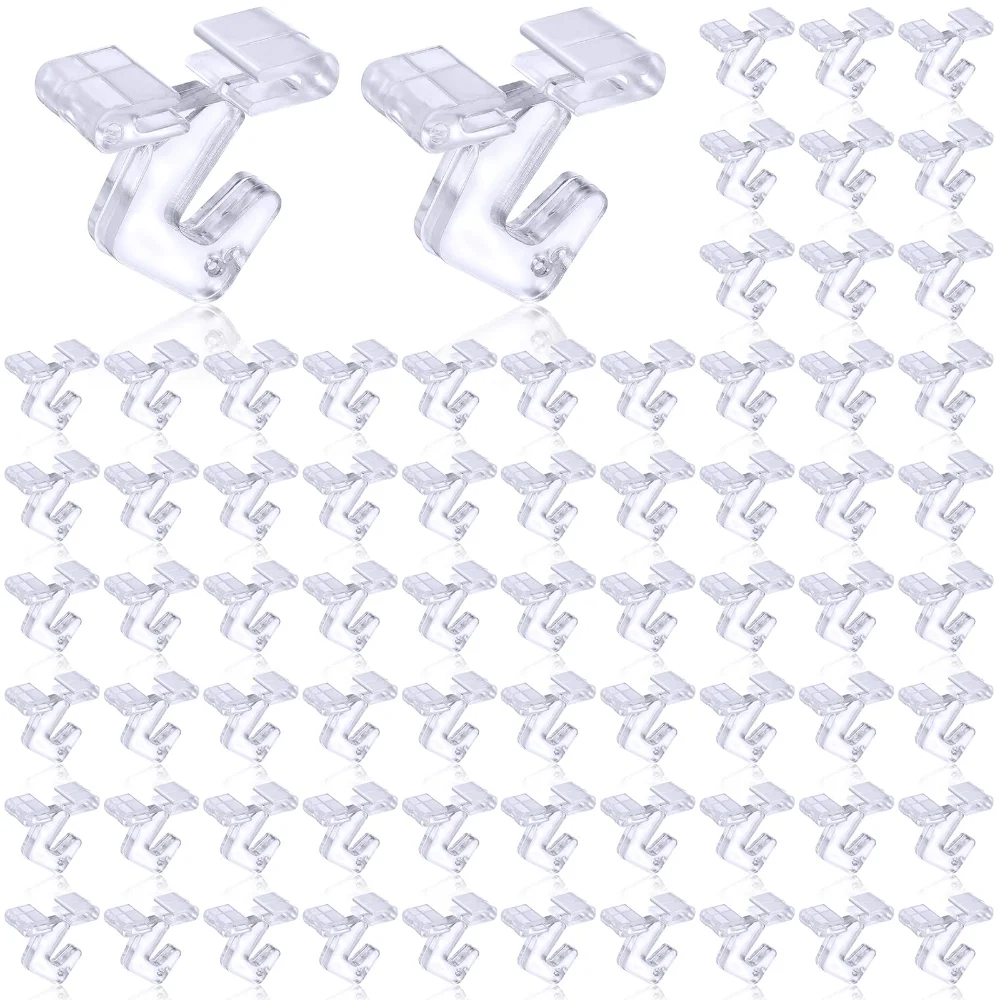
Drop-Ceiling Hooks, 100-pack
Ceiling Hooks
★★★★★ 4.6 · 618 family reviews
The drop ceiling is the other scale surface, and it is the schoolteacher’s wall. A classroom grid takes a clear plastic hook every couple of feet, and the arithmetic runs away faster than it reads: hooks along just the border of a room twenty-four feet by thirty is already more than fifty, before a single mobile hangs from the middle of the grid. The hundred-pack exists because the grid is always larger than memory, because the hooks migrate between classrooms and never migrate back, and because August ends before the ladder comes down.
Boot hangers close out the scale jobs from the closet side. A clip per pair, hung from the rod, and the closet floor reappears: twenty clips is a family’s boot wall, thirty-six is a family with weather. The clip is the same grip mechanism as the fridge-shelf clip two shelves over on our shelf page, which is the quiet pleasure of hardware: the same few honest mechanisms, sized for different rooms.
The mistakes we read about most
Reading what buyers write about this shelf, three failures repeat. The first is the straight-driven pin hook, hammered flat like a nail and then blamed for the slide. The angle is the mechanism; the printed rating assumes it.
The second is the stud found the hard way: a pin that meets wood behind the drywall and bends. That is not a failed pin, it is a found stud, and a found stud is an upgrade. Move the fastener a finger to the side for the pin, or use the stud deliberately for the heaviest piece in the room.
The third is the load added after the hang: the frame that gained a glass pane, the curtain that gained a blackout liner, the rafter hook that gained a second hose. Ratings are for the weight as hung. When the load grows, the hardware gets revisited, which takes a minute and beats the alternative at two in the morning by a comfortable margin.
A whole house, counted once
Walk a three-bedroom house with a notepad and the page fills the same way almost every time. Living spaces: a dozen framed pieces and a mirror. Each bedroom: four to six frames and a window of curtains. Dining room: the plate wall or the second mirror. Then the kitchen rail, the garage rafter, a closet rod or two. Total it and the hardware list writes itself: thirty to forty picture hooks across two weight bands, plate hangers by the twelve if plates are in the plan, curtain rings by the sixty, a bag of kitchen S-hooks and a bag of rafter ones.
Bought as counted packs, the whole list is four or five boxes, and what does not go on the walls goes into the drawer with its labels facing up: twenty-pound pin hooks with a dozen left in the box, spare rings still paired with their pins, a few S-hooks waiting for the next rail. The next picture costs one trip to that drawer and one match of rating to frame. The two-in-the-morning slide never happens, because the arithmetic was done once, on paper, in daylight, and the surplus is known to the piece.
The Hotop home and table shelf carries the full run in counted packs that map straight onto the notepad list: picture nails by the twenty-five or fifty, pin hooks by the fifteen or thirty, plate hangers by the twelve or twenty, curtain rings by the thirty or sixty, drop-ceiling hooks by the hundred, S-hooks by the thirty-six and rafter hooks by the eighteen. The wider Hotop shelves pick up where the walls end: the garden spigot, the craft bench, the celebration that needs a rack of leis hung overnight. Weigh the frame, read the wall, match the rating, and hang the whole house in an afternoon. The drawer of mystery hooks can retire.
